Haubitz+Zoche
Parliament of Rivers
PARLIAMENT OF RIVERS
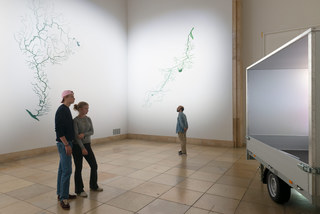
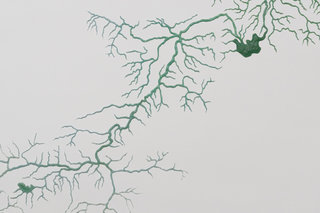
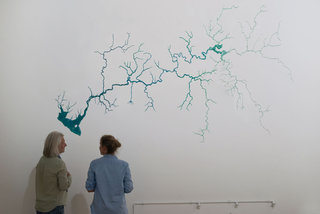
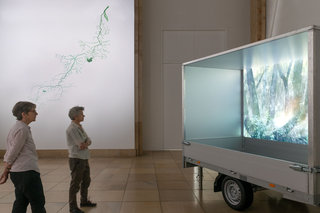
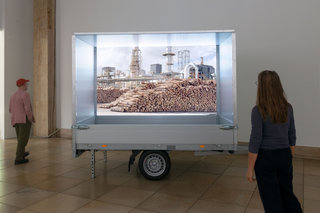
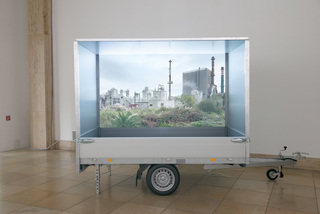
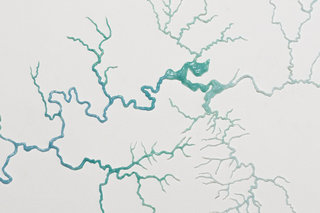
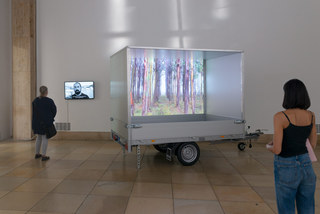
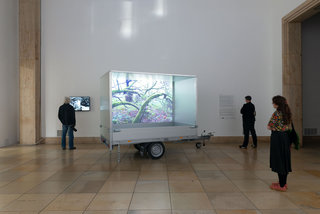
Wandskulpturen von drei Flussläufen mit ihren Nebenarmen, Videoskulptur CELULOSA INVASIVA,
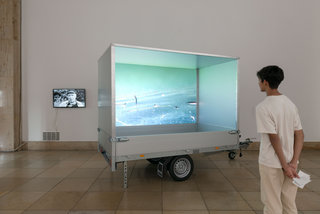
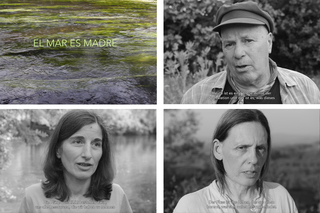
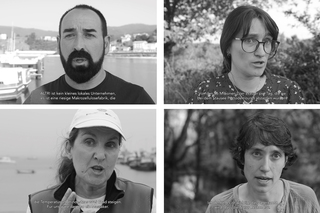
Video EL MAR ES MADRE, Haus der Kunst München, SZ 2025
konzeptuelle Mitarbeit: Claus Biegert
Die Installation bezieht sich auf die globale Bewegungf ür die „Rechte der Natur", die Anfang der 1970er Jahre entstand. Auslöser war eine Frage des Rechtsprofessors Christopher Stone aus Los Angeles: „Sollen Bäume Rechte haben?” Stone zog eine Parallele zum Status von Unternehmen, die als juristische Personen anerkannt werden mussten, bevor sie vor Gericht von Anwälten vertreten werden konnten. Warum, so fragte Stone, könne ein Berg nicht als juristische Person anerkannt werden?
Der Whanganui River in Neuseeland ist der erste Fluss der Welt, der als Rechtspersönlichkeit anerkannt wurde. Im Haus der Kunst hat er sich mit den Flüssen Loisach und Ulla zu einem „Parliament of Rivers“ zusammengeschlossen. Die Ulla ergreift gerade das Wort und präsentiert „Celulosa Invasiva”. Der während einer Künstlerresidenz in Do Picho in Zentralgalicien gedrehte Film veranschaulicht die potenziellen ökologischen Auswirkungen einer geplanten Papierfabrik des portugiesischen Unternehmens Altri. Durch ihren extrem hohen Wasserverbrauch und die Pflanzung von Eukalyptus-Monokulturen würde sie die biologische Vielfalt der Region bedrohen . Ergänzend geben die Flussanrainer*innen in dem Film EL MAR ES MADRE der Ulla eine Stimme. Ein Beispiel von vielen für die industrielle Zerstörung der Lebensadern unseres Planeten.
Die Installation entführt uns in eine fiktive Zukunft, in der Flüsse selbst zu Akteuren werden, sich versammeln und über die Probleme sprechen, die unser anthropozentrisches Rechtssystem ihnen bereitet.
VIDEO CELULOSA INVASIVA https://www.youtube.com/watch?v=w1M56OZKR-8
VIDEO EL MAR ES MADRE https://www.youtube.com/watch?v=hrzAhZLPpsw
KÜNSTLERRESIDENZ DO PICHO https://dopicho.com/stefanie-zoche/
enter text here
PARLIAMENT OF RIVERS
Wall sculptures of river courses with tributaries, video sculpture, loop of 'Celulosa Invasiva', 11 min, monitor, loop of 'El Mar es Madre', 33 min Biennial at Haus der Kunst Munich, SZ 2025
conceptual collaboration: Claus Biegert
The installation refers to the global 'Rights of Nature' movement, which originated in the early 1970s when Los Angeles law professor Christopher Stone asked the question, 'Should trees have standing?' Stone drew a parallel with the status of companies, which had to be declared legal entities before they could be represented by lawyers in court. Why, he asked, could a mountain not be declared a legal entity?
The Whanganui River in New Zealand is the first river in the world to be granted legal personhood. In this installation, it has joined forces with the Loisach and Ulla rivers to form a ‘Parliament’. The Ulla has taken the floor at the Haus der Kunst, where it is presenting ‚Celulosa Invasiva‘. The film, that was shot during an artist residency in Do Picho, central Galicia, vividly illustrates the potential ecological impact of a planned paper mill by the Portuguese company Altri. The factory would use 40 million liters of water from the River Ulla per day to produce cellulose. Demand for raw materials would displace indigenous chestnut and oak forests, replacing them with monocultures of eucalyptus. Overall, this would have an extremely negative impact on the region‘s biodiversity and the quality of life of its people.
VIDEO CELULOSA INVASIVA https://www.youtube.com/watch?v=w1M56OZKR-8
VIDEO EL MAR ES MADRE https://www.youtube.com/watch?v=hrzAhZLPpsw
ARTISTS RESIDENCY DO PICHO https://dopicho.com/stefanie-zoche/
JavaScript is turned off.
Please enable JavaScript to view this site properly.