Utopia
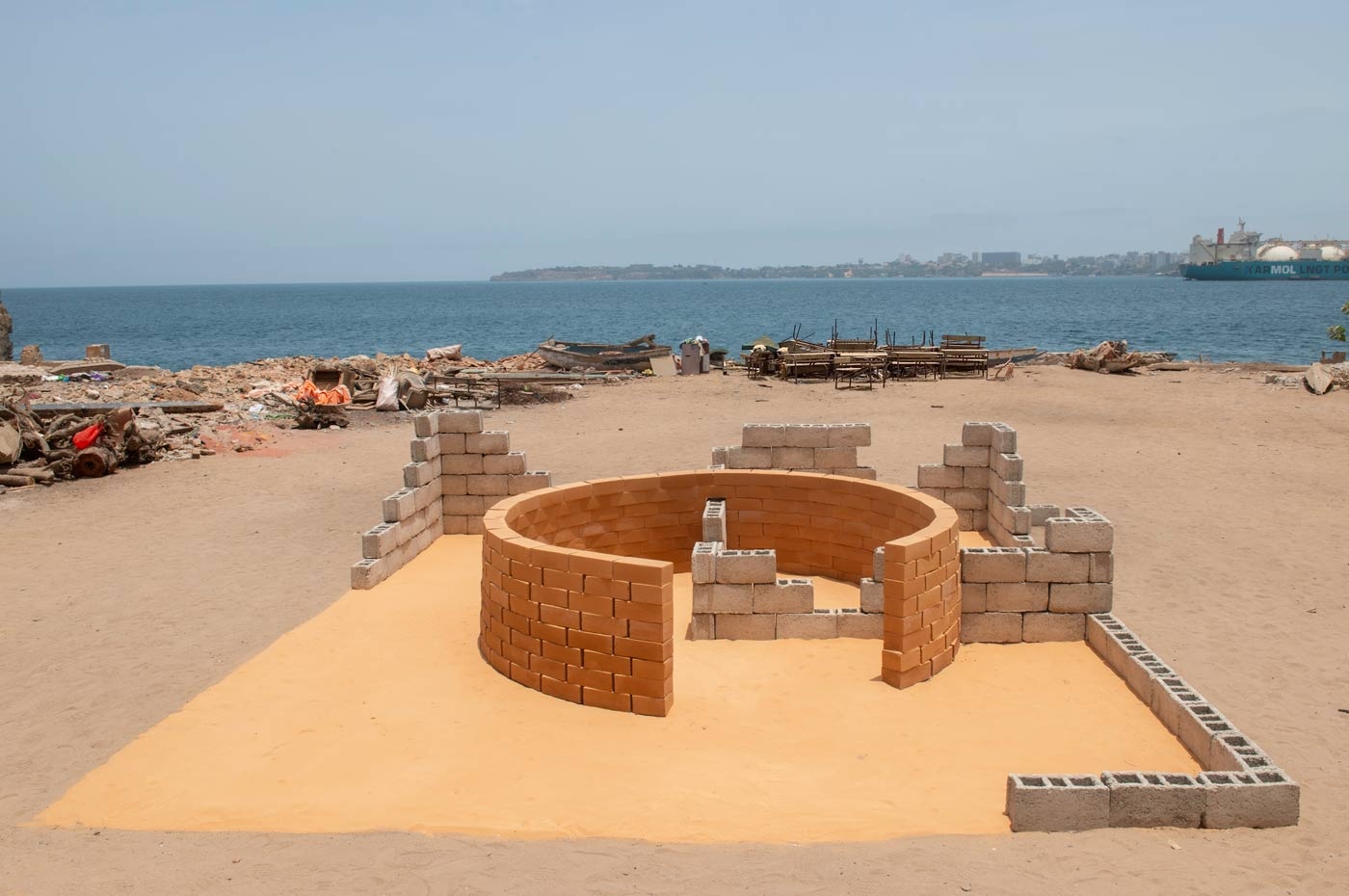
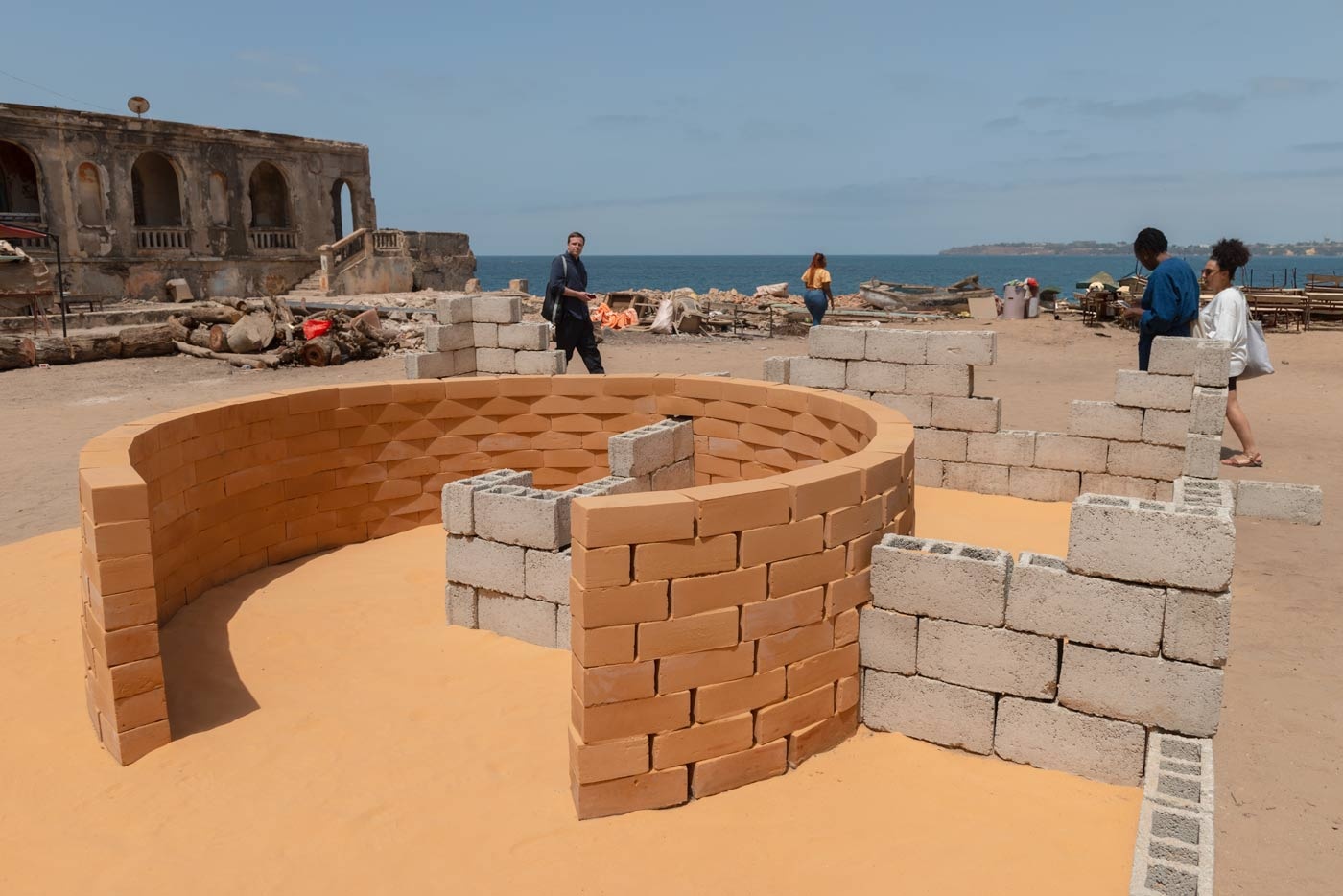
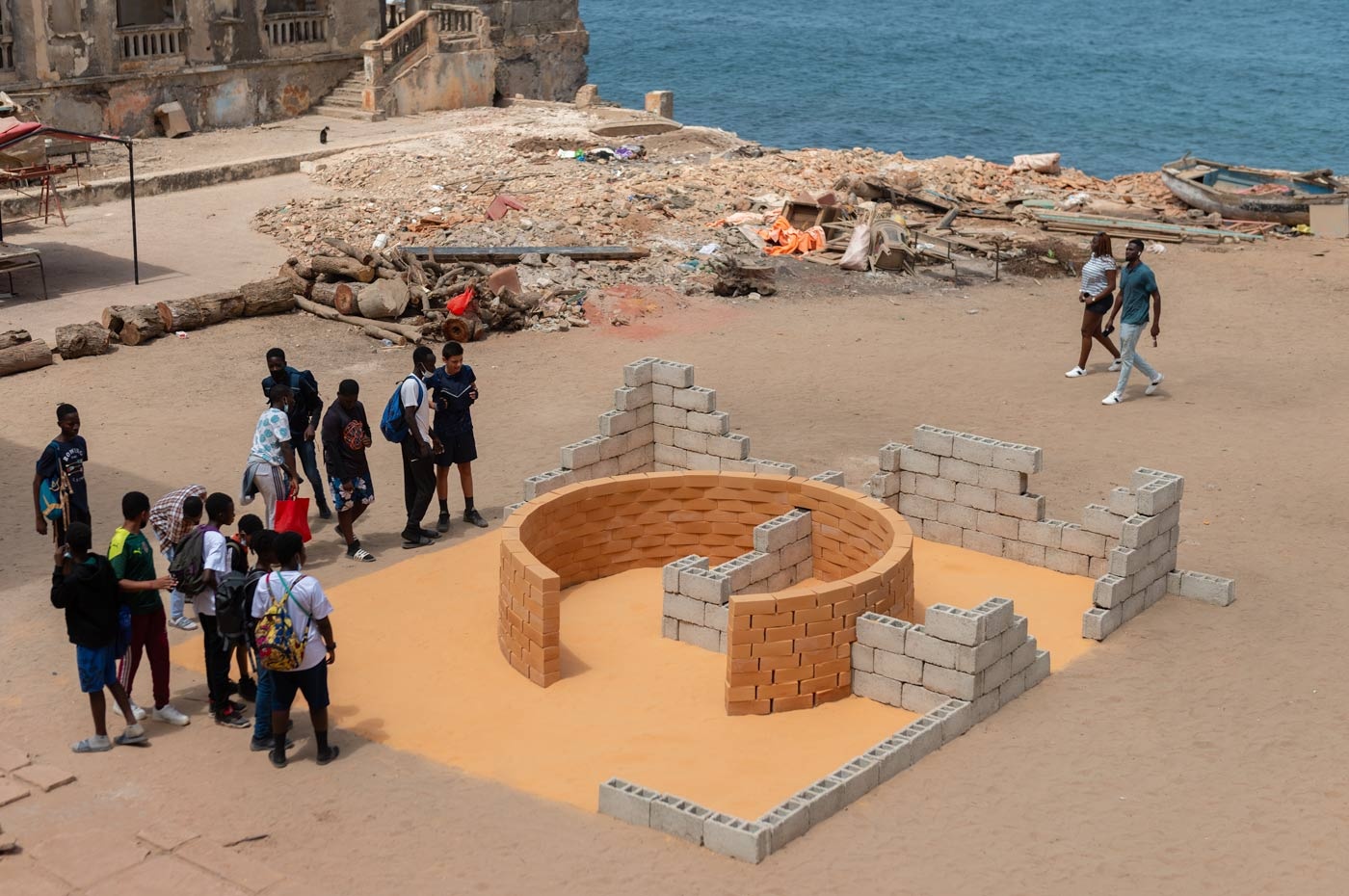
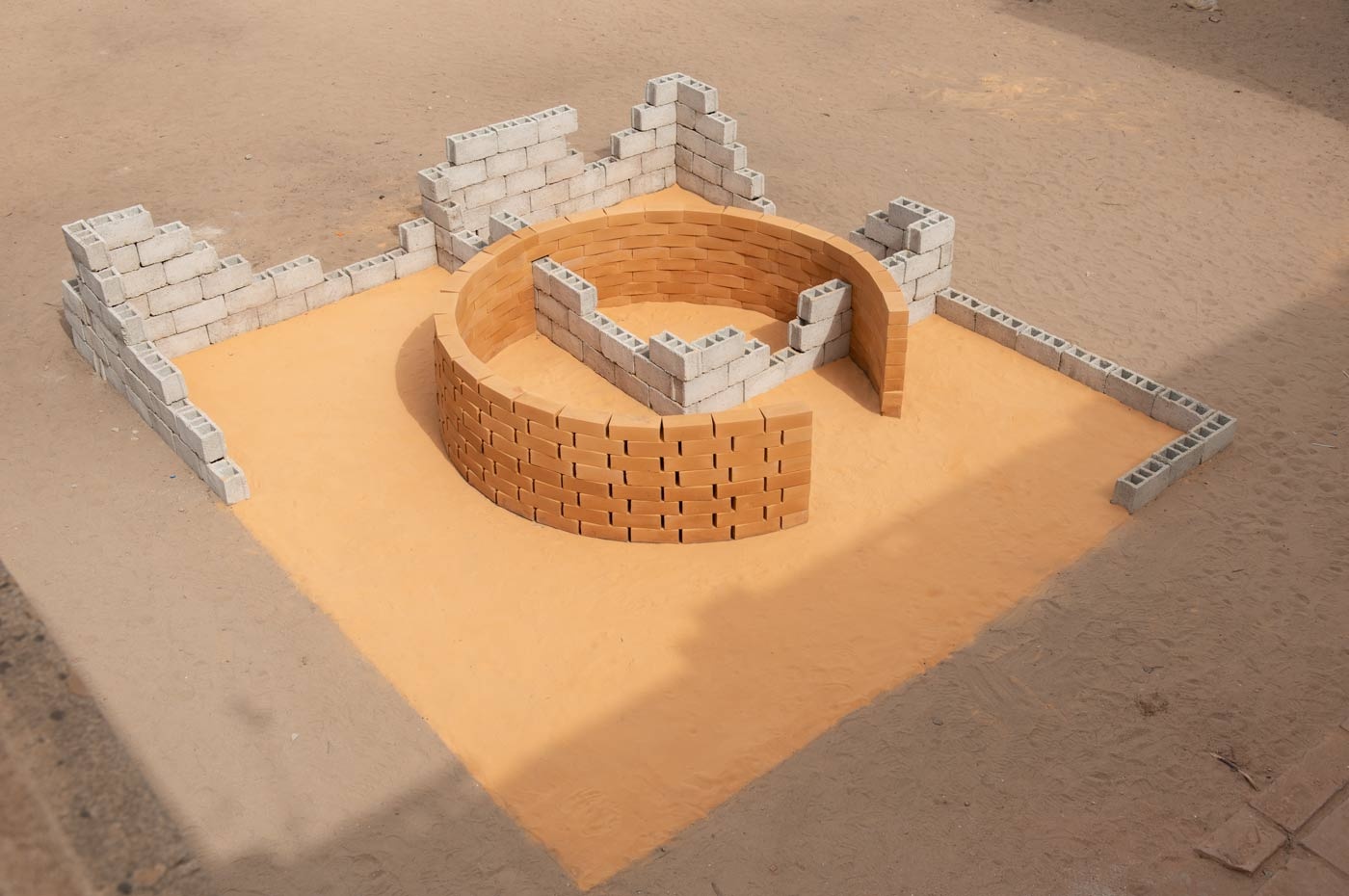
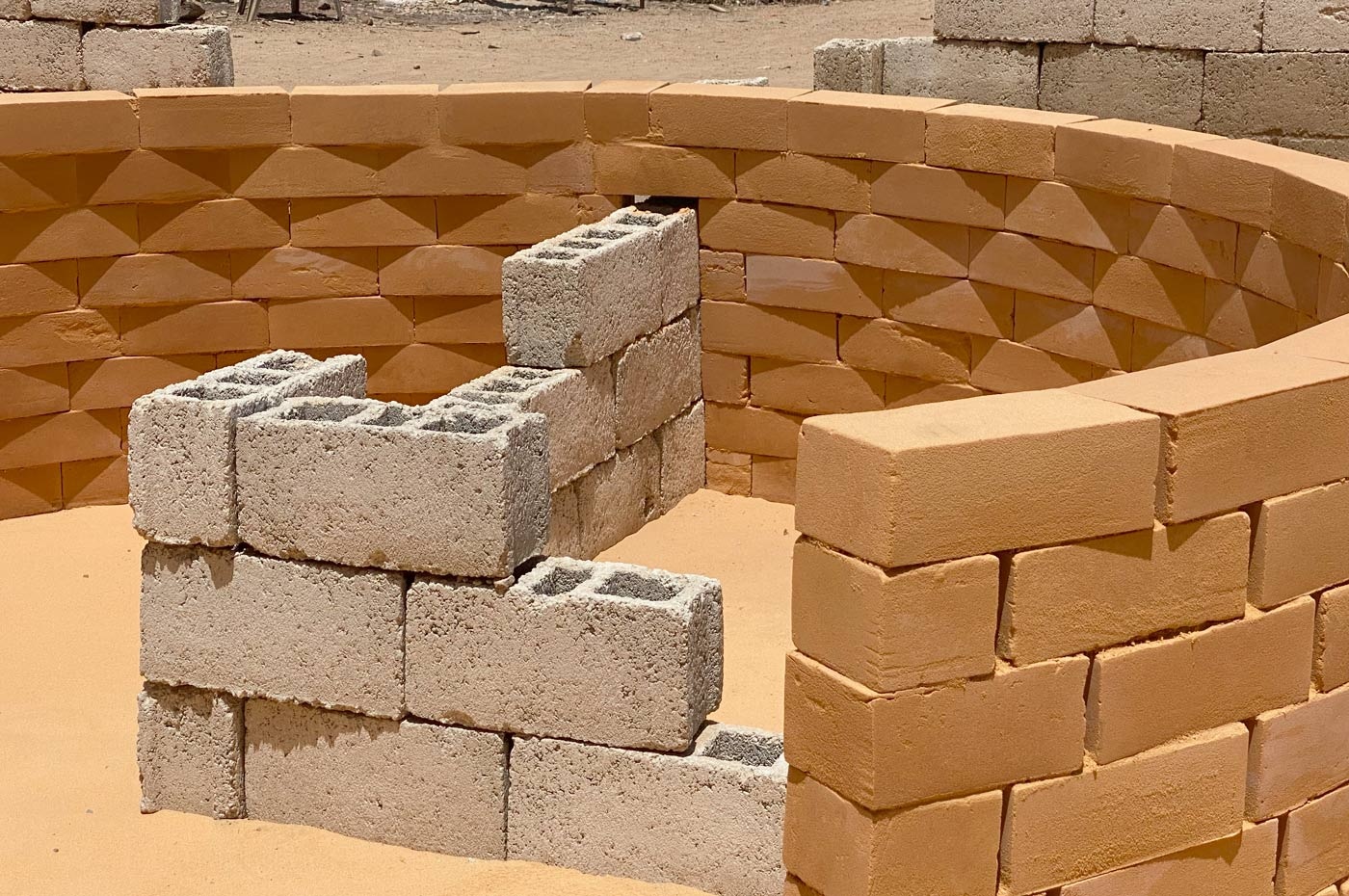
Sandbausteine, Betonbausteine, Sand, 7 x 7 m
in Zusammenarbeit mit Yvon Ngassam (Künstler aus Kamerun)
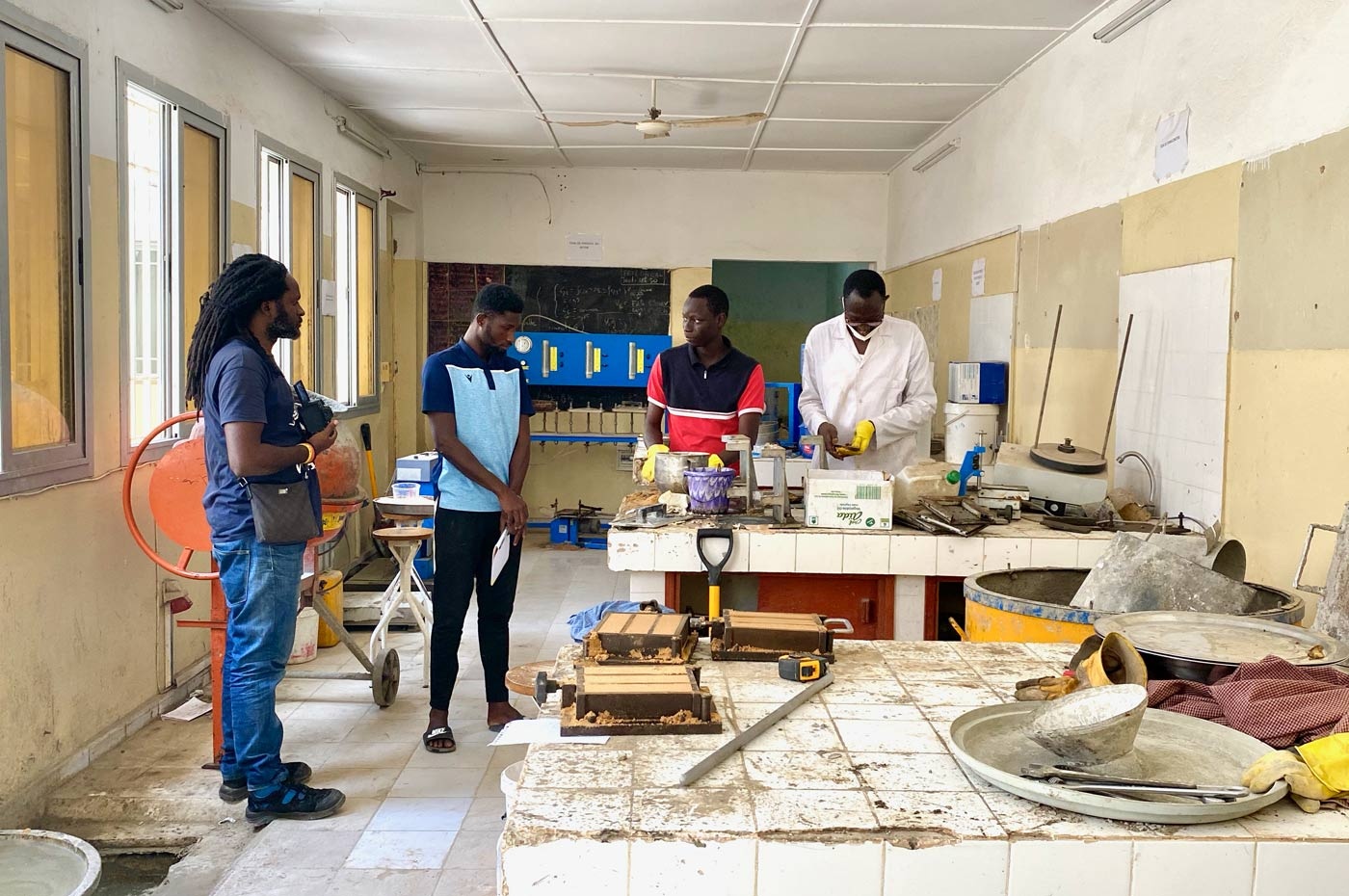
und Prof. Vincent Sambou, Université Cheikh Anta Diop, Dakar
Ausstellung LE DON / DIE GABE im ehemaligen Gouverneurspalast auf der Insel Gorée, Dakar, Senegal
Im Rahmen der Biennale DAK'ART 2022 OFF
Eine utopische Vision steht am Anfang dieser Arbeit: die Suche nach einem Baustoff mit einem niedrigen CO2-Fußabdruck als Alternative zu Betonbausteinen, da diese mit sehr hohen CO2-Emissionen verbunden sind: pro Tonne Zement wird eine Tonne Kohlendioxyd freigesetzt, dies entspricht etwa 6-8% der Emissionen weltweit.
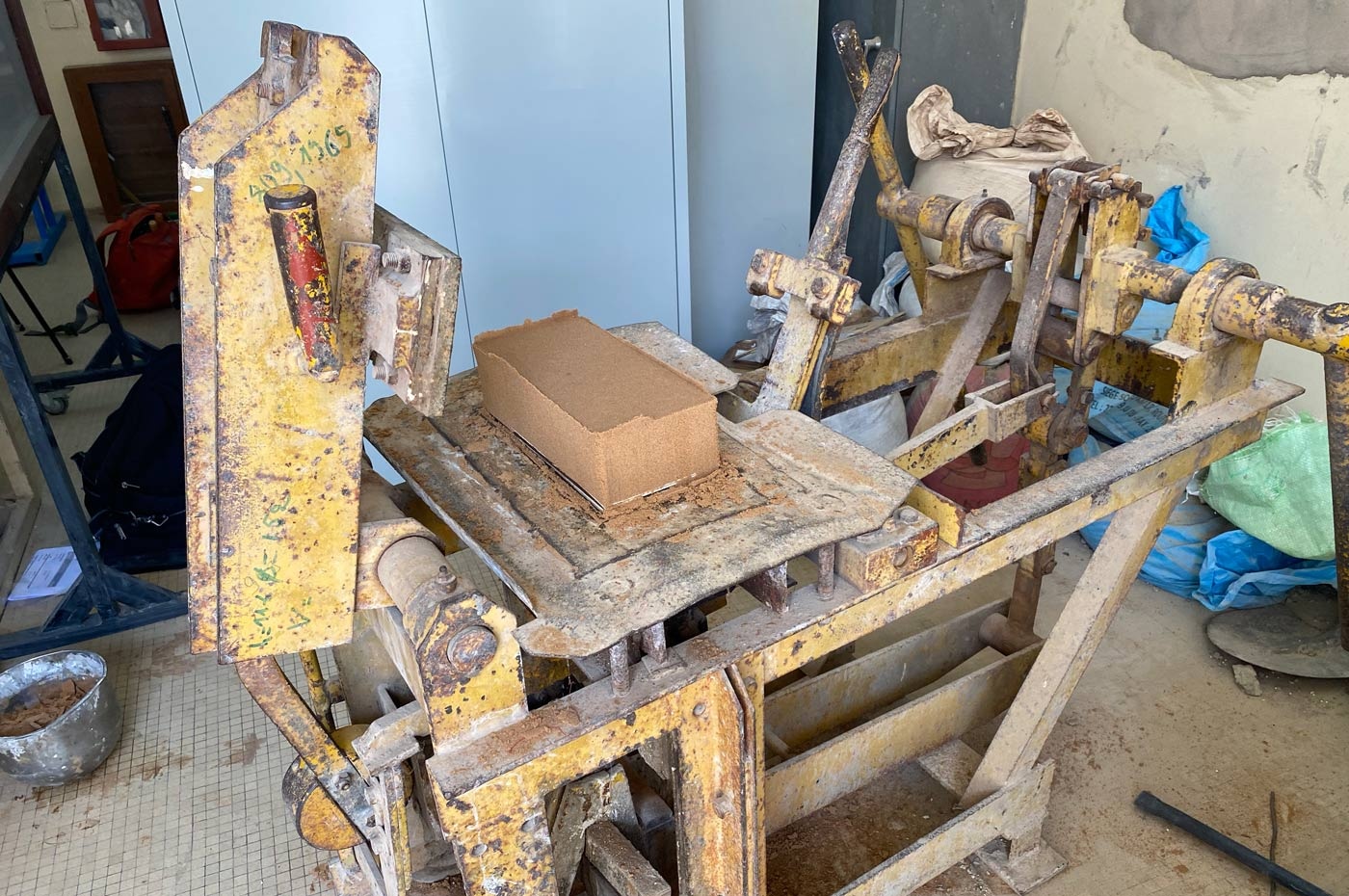
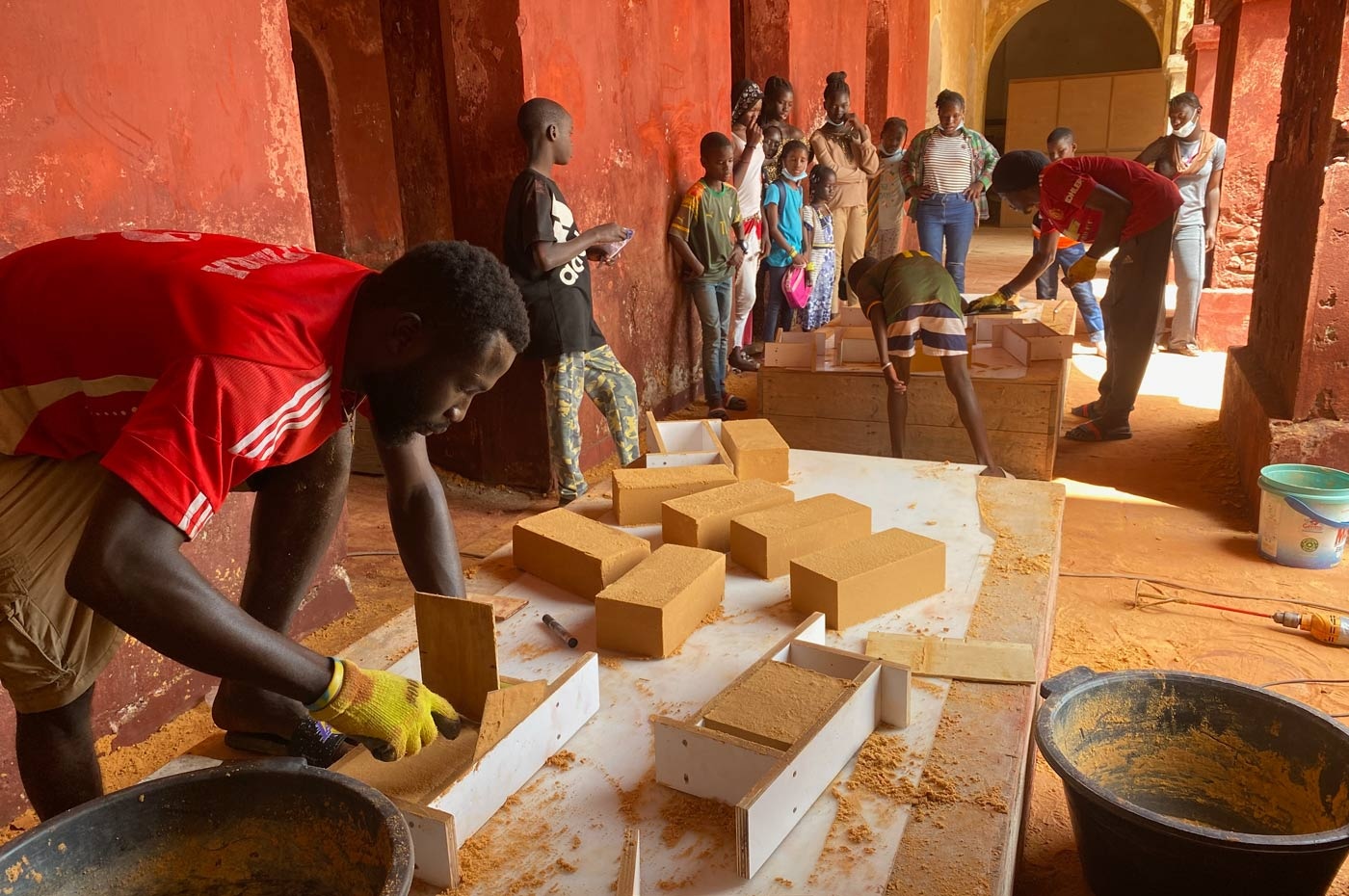
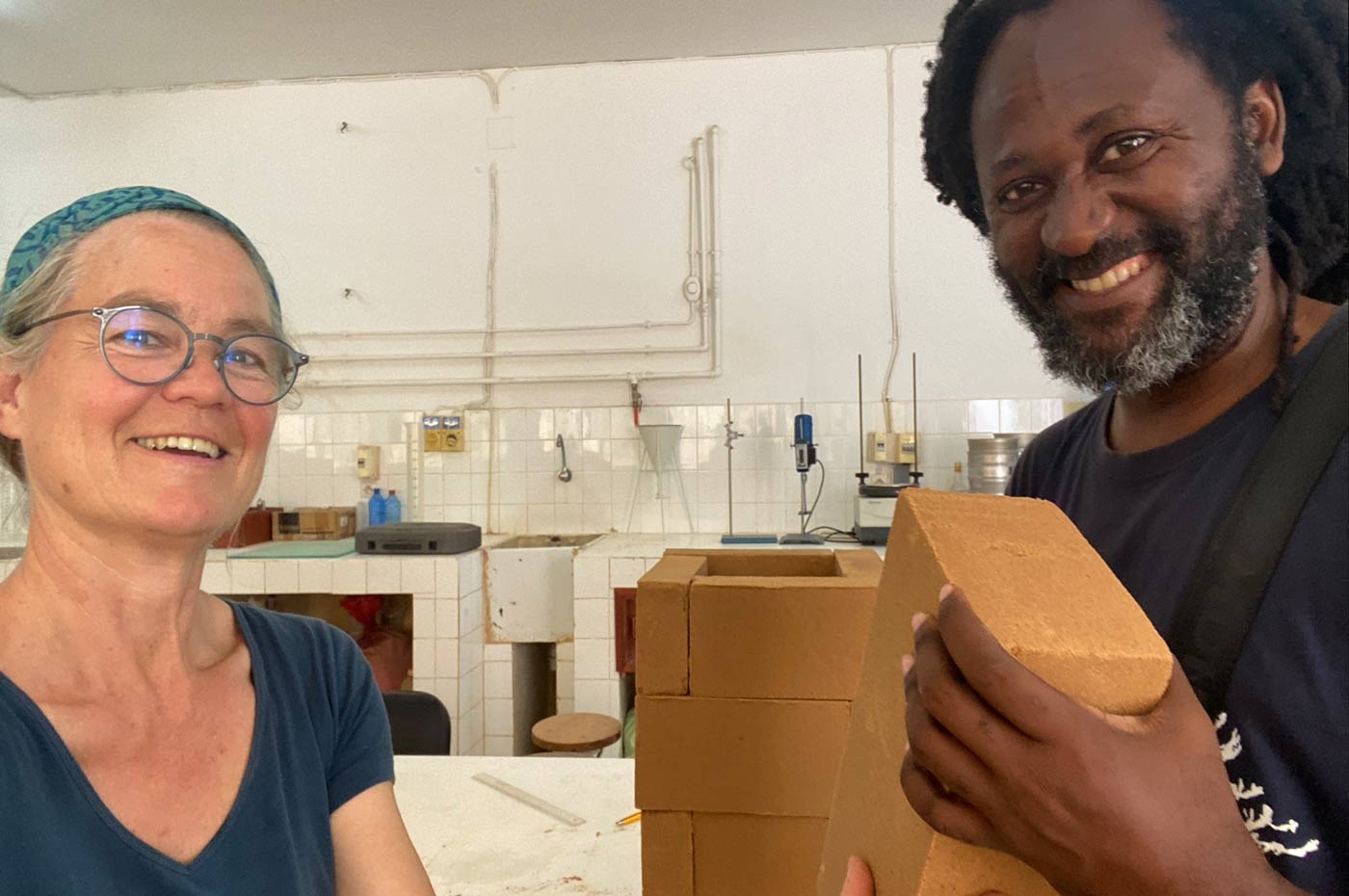
Die in dieser Skulptur verwendeten Sandbausteine wurden vor Ort mit einem biologisch abbaubaren Binder hergestellt und enthalten keinerlei Zement. Analysen der Université Cheikh Anta Diop haben ergeben, dass ihre Stabilität für Bauzwecke ausreichend ist. Zudem könnte man auch Wüstensand verwenden, der für die Herstellung von Beton ungeeignet ist, und somit gleichzeitig auf zwei drängende ökologische Probleme reagieren.
Die skulpturale Umsetzung verwebt traditionellen Bauformen mit der Formensprache der Moderne und öffnet einen poetischen und offenen Assoziationsraum.
UTOPIA
Sand bricks, concrete bricks, sand, 7 x 7 m
in collaboration with Yvon Ngassam (artist from Cameroon)
and Prof. Vincent Sambou, Université Cheikh Anta Diop, Dakar
Exhibition LE DON / DIE GABE in the former Governor's Palace on Gorée Island, Dakar, Senegal
In the context of the Biennale DAK'ART 2022 OFF
A utopian vision stands at the beginning of this work: the search for a building material with a low carbon footprint as an alternative to concrete blocks, as these are associated with very high CO2 emissions: one tonne of carbon dioxide is released per tonne of cement, which corresponds to around
6-8% of emissions worldwide.
The sand bricks used in this sculpture were made on site with a biodegradable binder and do not contain any cement. Analyses by the Université Cheikh Anta Diop have shown that their stability is sufficient for building purposes. In addition, one could also use desert sand, which is unsuitable for the production of concrete, and thus respond to two pressing ecological problems at the same time.
The sculptural realisation interweaves traditional building forms with the formal language of modernity and opens up a poetic and open associative space.