SATURNIUS TROCHOIDES, HELIODISCUS UMBONATUS ET AL.
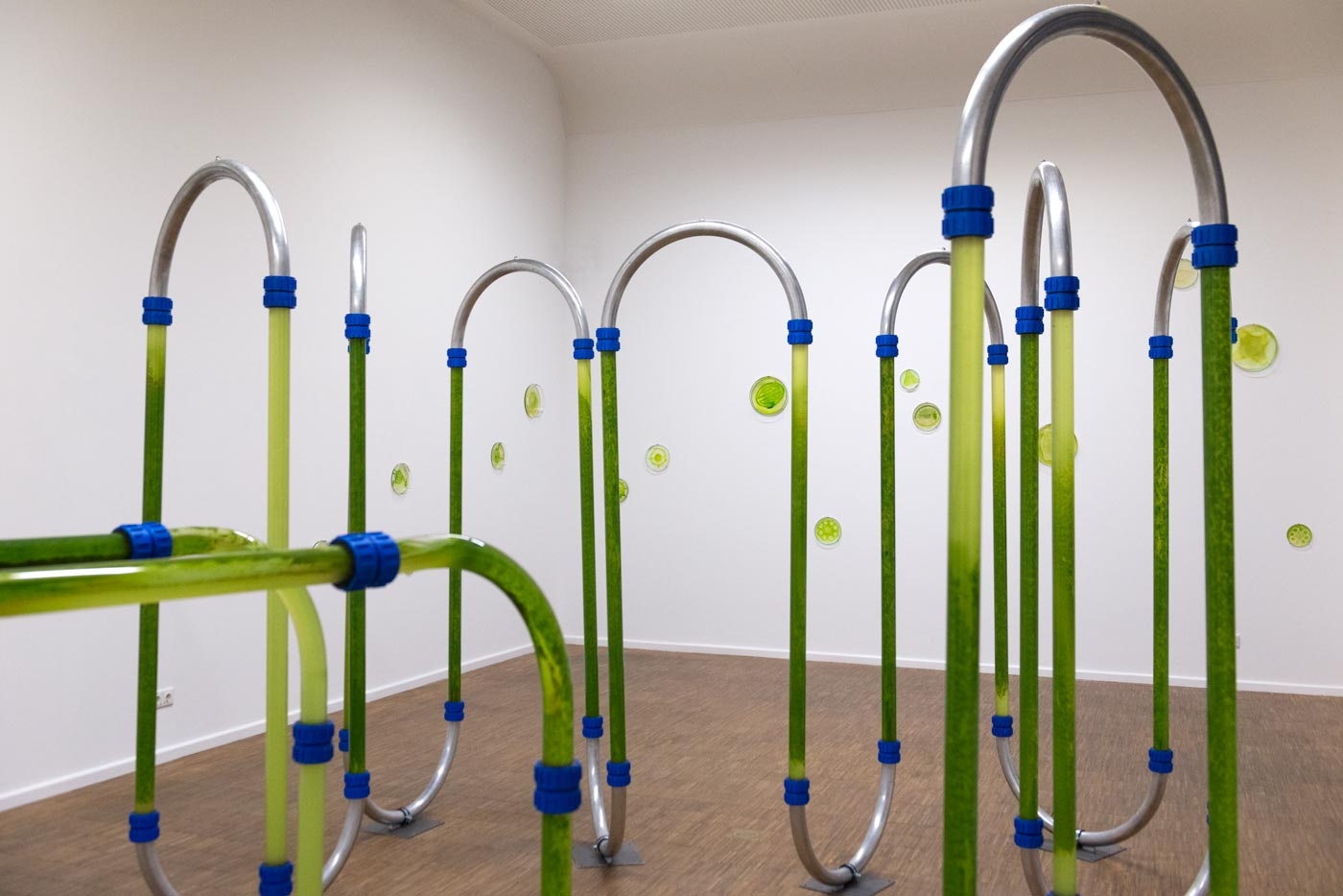
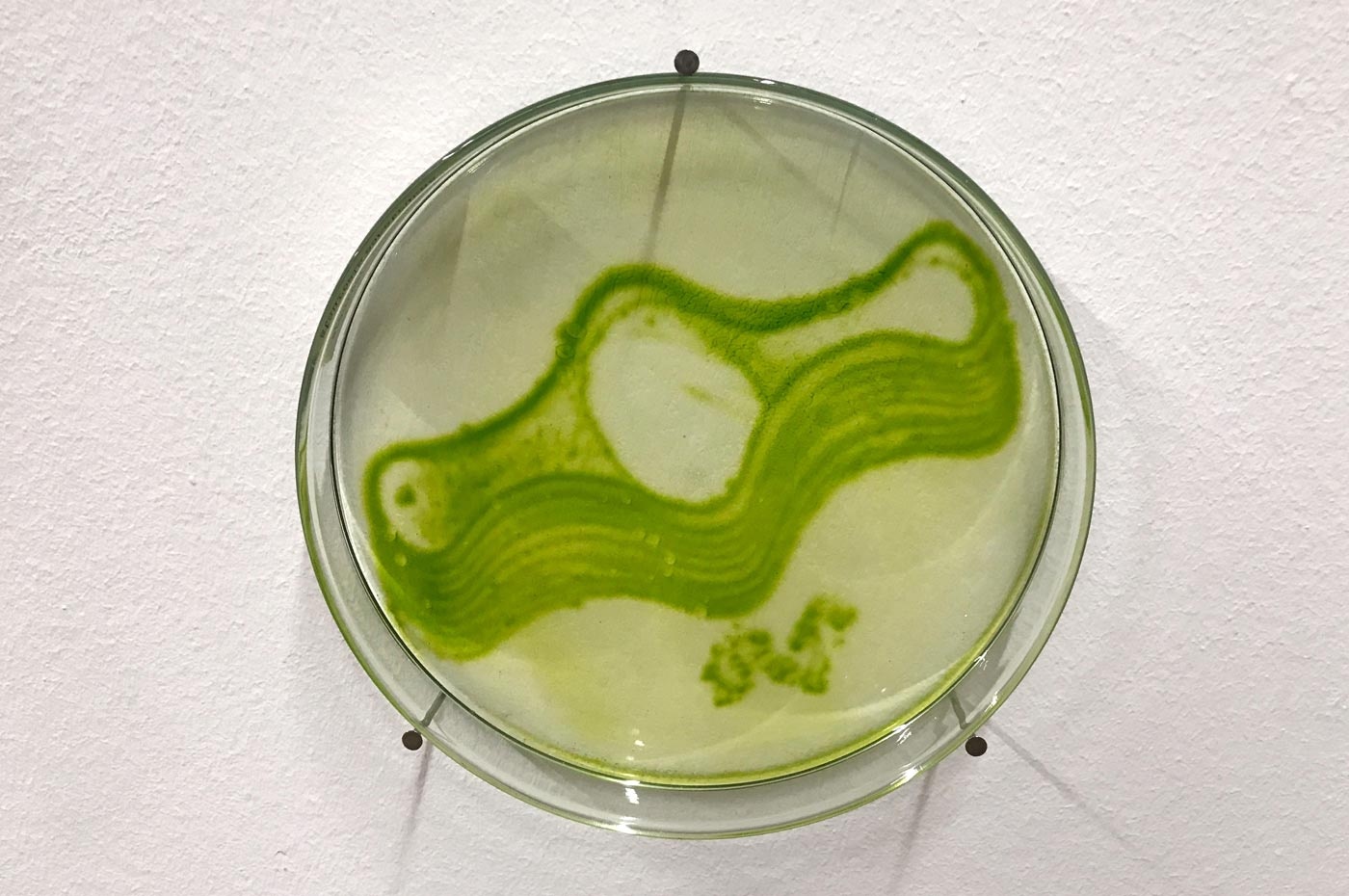
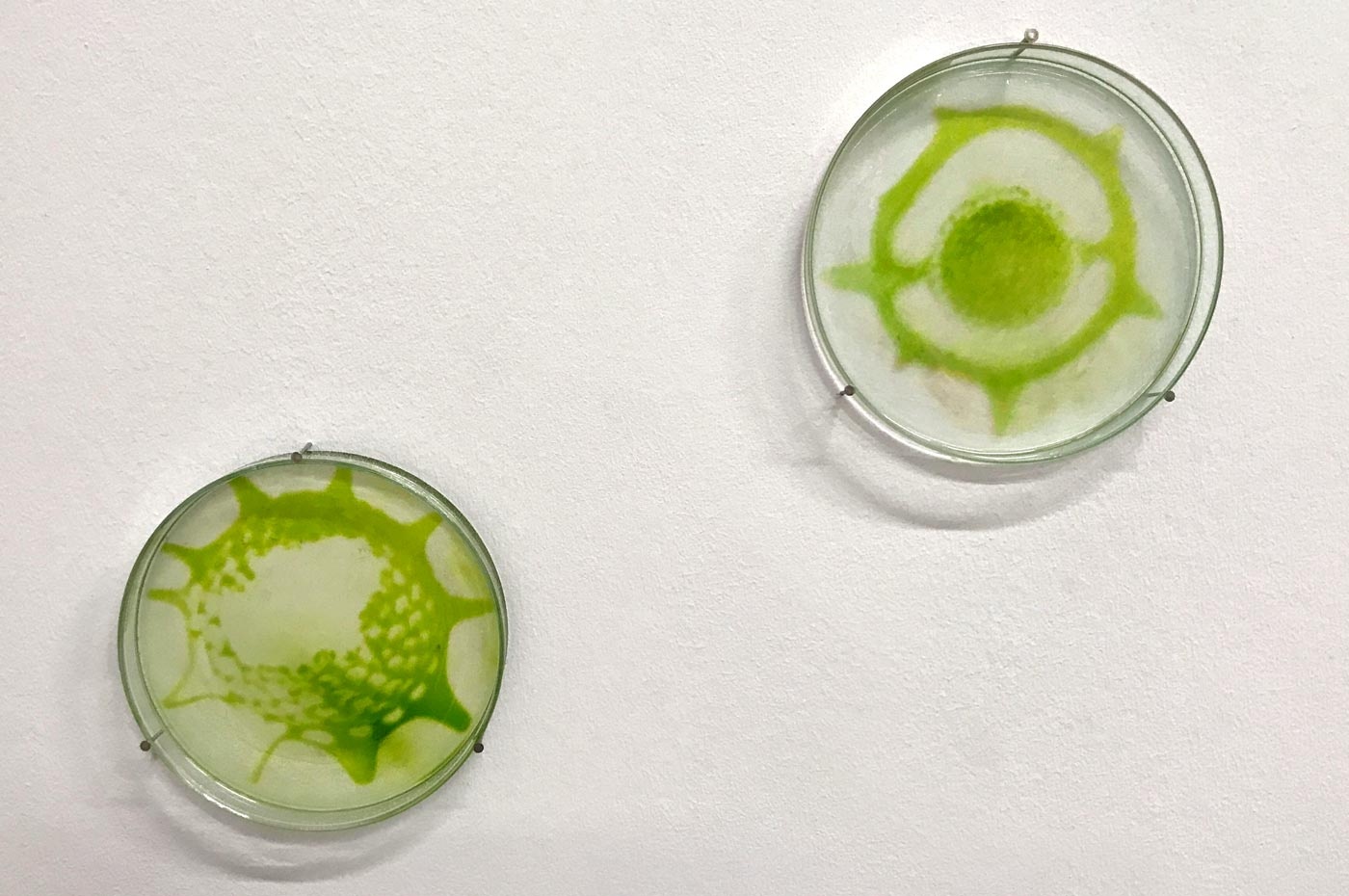
Petrischalen aus Glas, phototaktische Algen, Epoxidharz, SZ, Kunsthaus Nürnberg, 2017
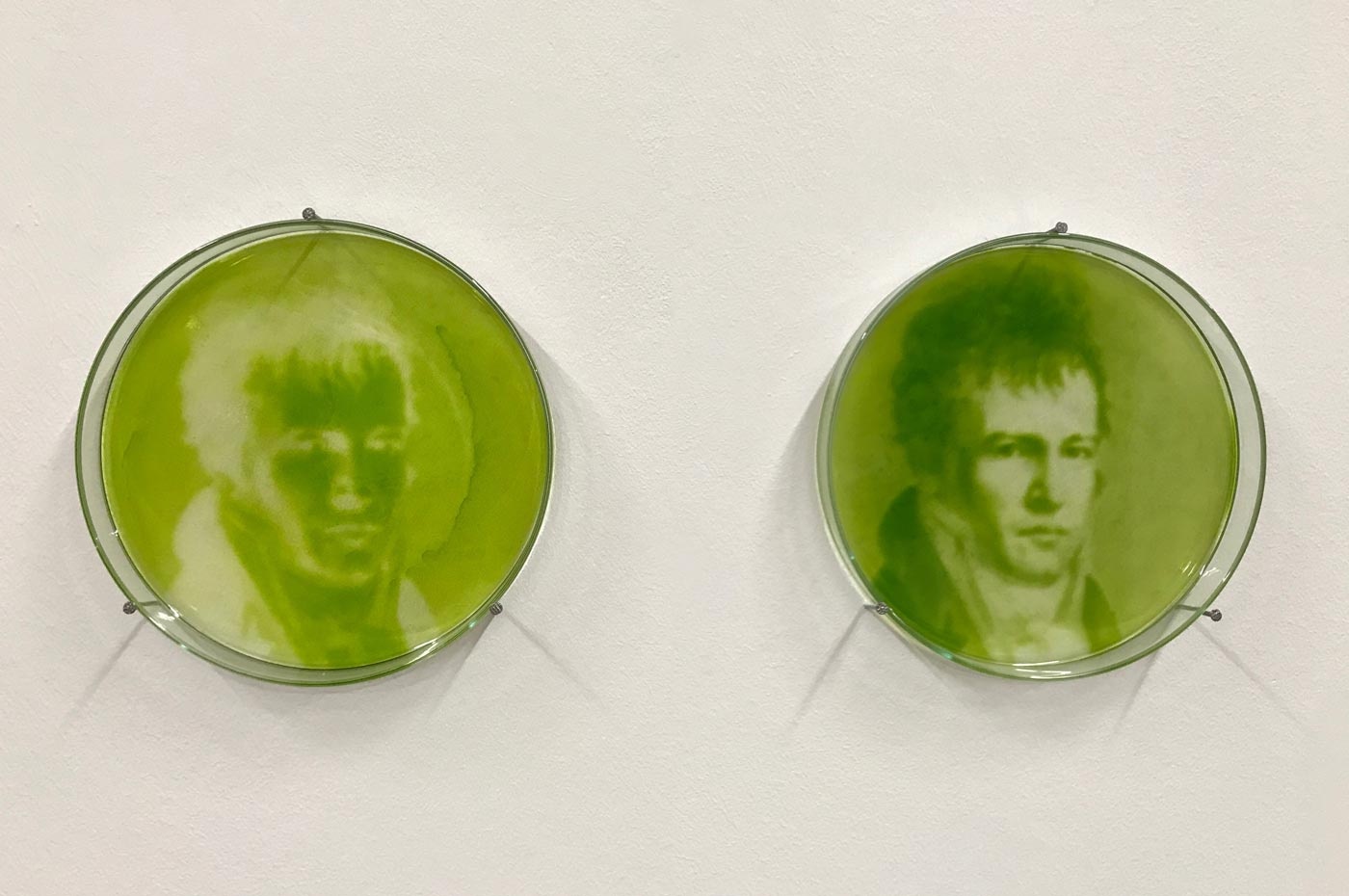
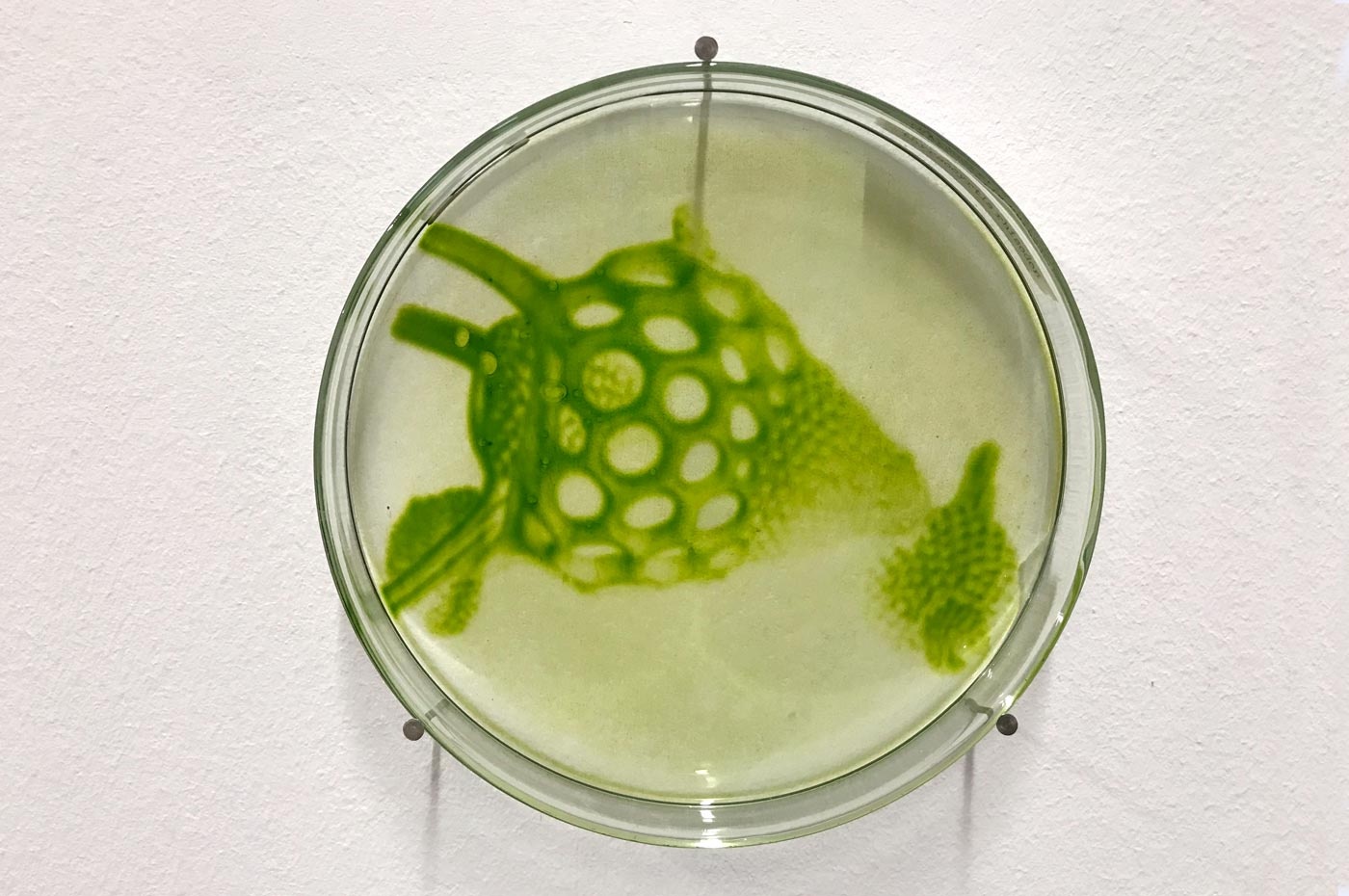
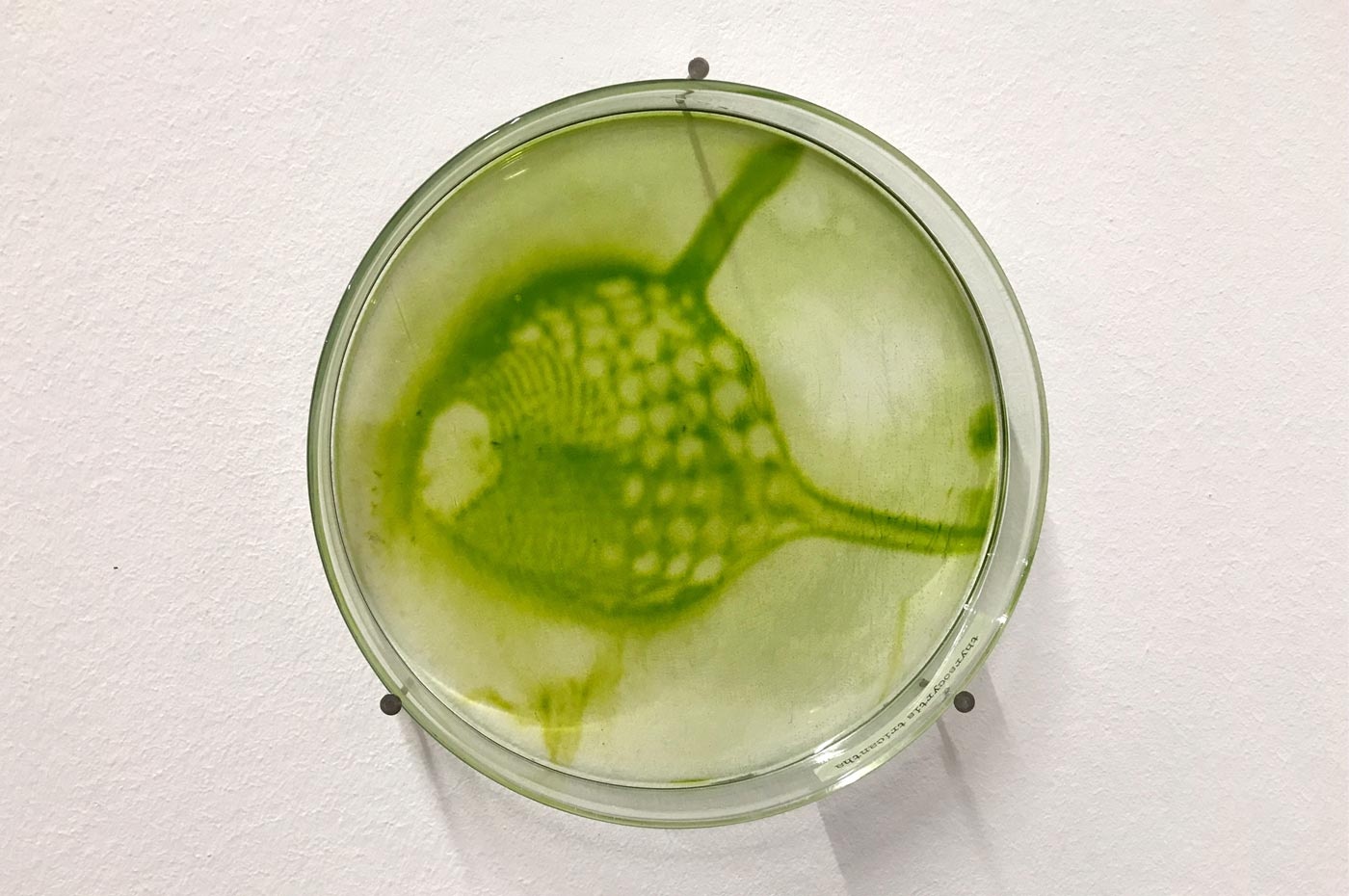
Phototaktische Algen haben die Fähigkeit, sich zum Licht hin zu bewegen. In Petrischalen wurden diese Algen so „belichtet“, dass sie die Formen von Kieselalgen nachbilden: Mikroskopisch kleine Algen zeichnen makroskopisch vergrößerte Aufnahmen von Algen.
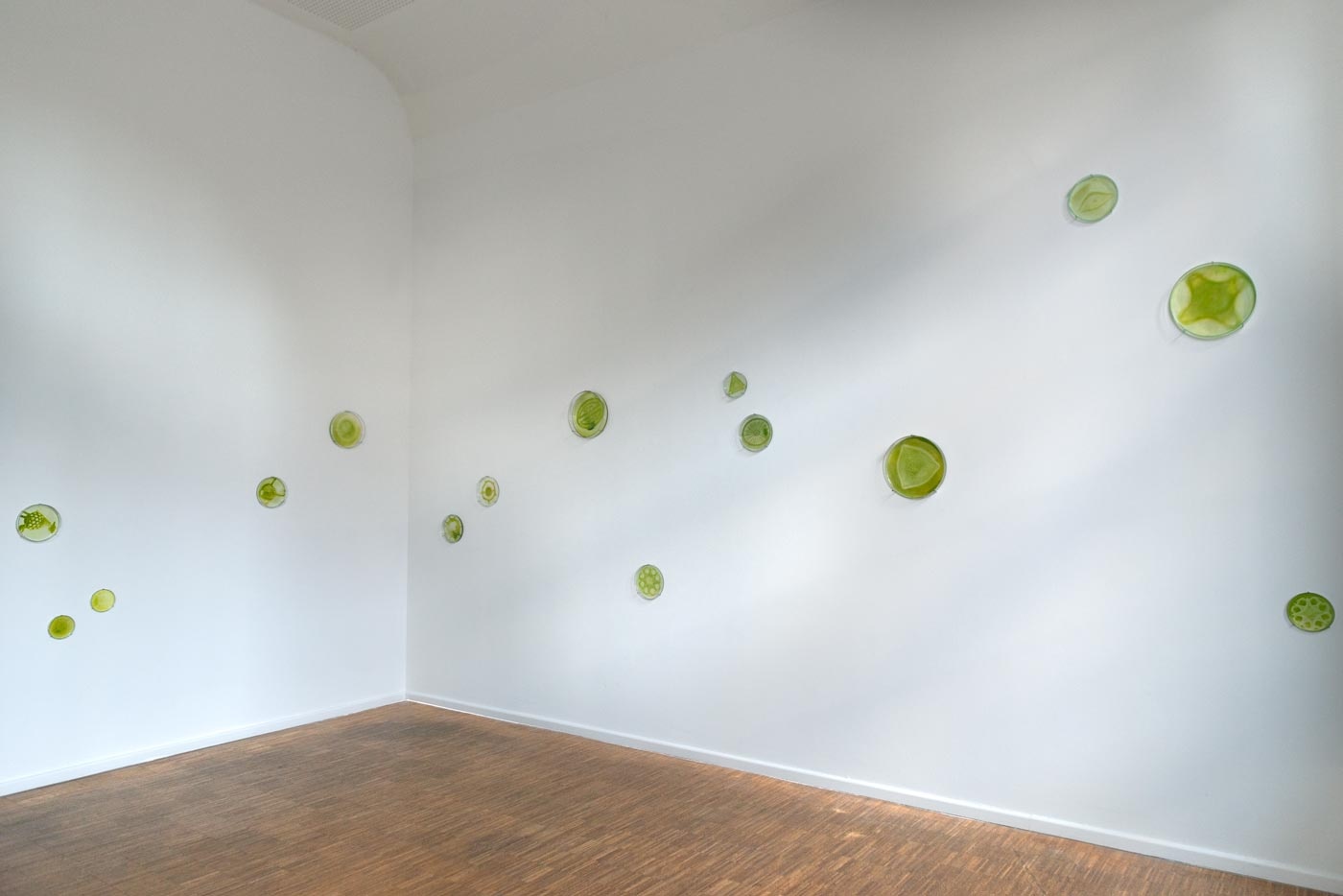
Die wissenschaftlichen Bezeichnungen der einzelnen Diatomeen und Radiolarien nehmen Bezug auf deren Formen. Inspiriert von der Kieselage „saturnius trochoides“ sind die Petrischalen in freier Anordnung wie die Gestirne eines Sternbildes auf der Wand angeordnet.
SATURNIUS TROCHOIDES, HELIODISCUS UMBONATUS ET AL.
Glass Petri dishes, phototactic algae, epoxy resin, SZ, Kunsthaus Nürnberg, 2017
Phototactic algae have the ability to move towards the light. In Petri dishes, these algae were „exposed“ to light in such a way that they mimic the shapes of diatoms: Microscopic algae draw macroscopically enlarged images of algae. The scientific names of the individual diatoms and radiolarians refer to their shapes. Inspired by the diatom „saturnius trochoides“, the petri dishes are arranged freely on the wall like the stars of a constellation.